Roaming vs eSIM vs Local SIM: Which is Best for Travel?
Staying connected while traveling is no longer optional — it’s essential. From booking rides to navigating maps, your mobile data matters from the moment you land.
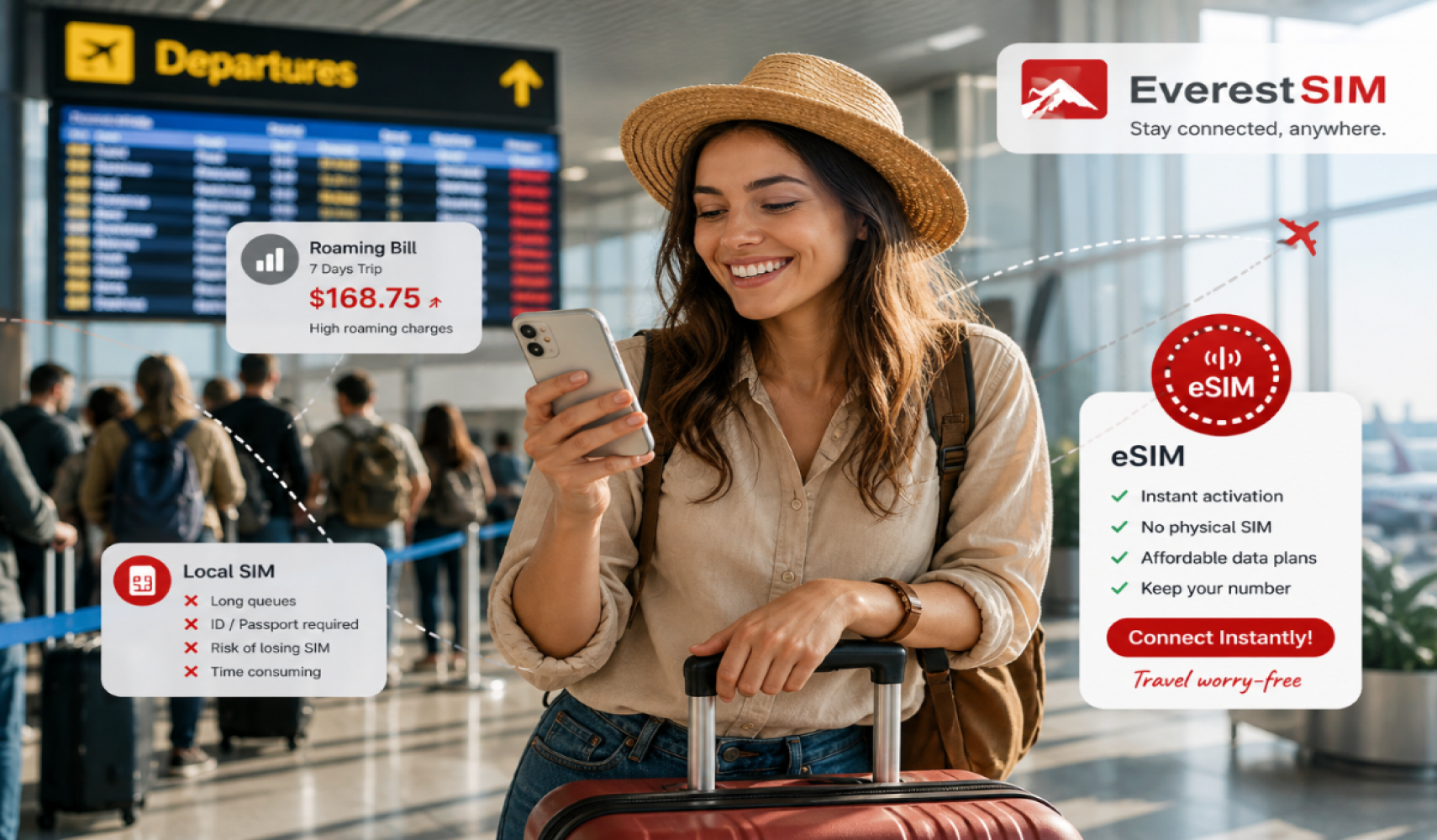
But which option is actually best: roaming, local SIM, or eSIM?
Option 1: International Roaming
What it is: Using your home SIM card abroad with your carrier's roaming plan.
Pros:
> Works instantly (no setup required)
> Keep your existing number
> No need to change settings
Cons:
> Expensive
> Data limits are often low
> Risk of unexpected charges
Option 2: Local SIM Card
What it is: Buying a physical SIM card at the airport or local store
Pros:
> Usually cheaper than roaming
> Local network speeds
> Can include local calls
Cons:
> ❌ Time-consuming (queues at airport)
> Requires passport/ID
> Need to swap SIM cards
> Risk of losing your original SIM
> Not convenient for short stays
Best for: Long stays (1 - 2+ weeks)
Option 3: eSIM (Digital SIM)
What it is: Instant A digital SIM you can install instantly - no physical sim card required
Pros:
>⚡ Instant activation (before you travel)
> No physical SIM swap
> Works immediately when you land
> Transparent pricing (no hidden fees)
> Keep your primary SIM for calls
Cons:
> Requires eSIM-compatible phone
> Slight setup needed (1–2 minutes)
Best for: Most travelers (short trips, business, tourists)
💡Real Travel Scenario (Relatable)
You land in Singapore (or any country):
· Roaming: Your data works, but you're worried about your bill
· Local SIM: You’re stuck in a queue after a long flight
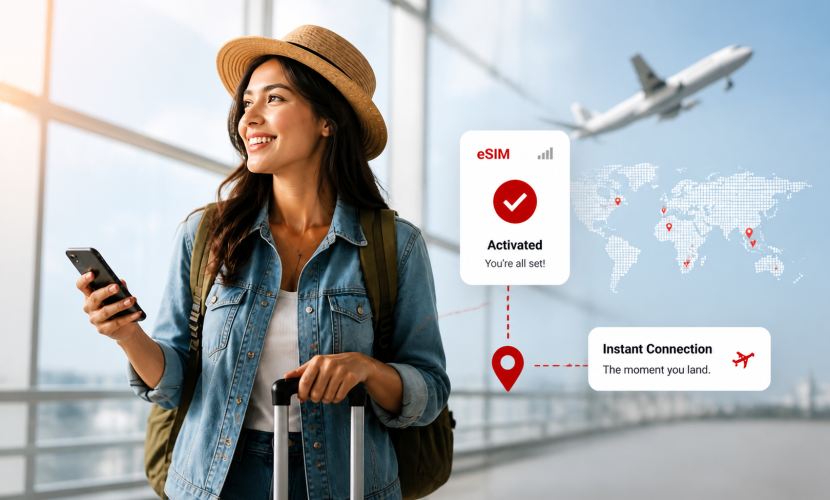
· eSIM: You step out of the plane and your internet is already working
👉 That’s the difference.
Stay Connected Wherever You Travel
04 May 2026